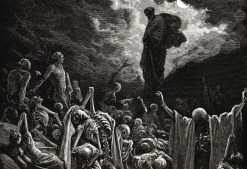
 We serve a God who does not assure us that things will keep moving along nicely. But he does give us hope that thing, ideas, dreams and people that die will rise again.
Central Streaming: Resurrection
Reply

We serve a God who does not assure us that things will keep moving along nicely. But he does give us hope that thing, ideas, dreams and people that die will rise again.
So here is a link to something from my daughter Krystiana. I think you will like it.
This is from my daughter, who was just in Rome and by this time just left for Ethiopia. Thanks Krystiana, for writing a little about your experiences.

That’s what we’ll say to each other ten years from now. And we’ll nod and laugh and then we’ll tell the story to whoever will listen, and maybe we’ll embellish a little more each year, but maybe not, because it’s a pretty good story as it is.
Saturday, July 19 2014, 2:30pm.
We’ve just checked in to our unexpectedly lovely bed & breakfast in Rome, and set down with maps and lists and the internet to decide what to do with the wealth of a whole afternoon. We find out the Vatican museum is closed on Sundays, and we’ve waited twenty years and 4000 miles to see the Sistine Chapel, which makes the decision pretty easy. We look up bus routes.
2:50pm
We learn that, although the museum is open till 6, the ticket office closes at 4pm. We gather our things, exit the hotel, and run to what we…
View original post 526 more words
 In a previous post I made the point that the idea that we are made in God’s image does a lot to explain our intuitive moral sense. If he is, and is good and we are wired to reflect his character, then human guilt (or the lack of it) is not merely a feeling, but the result of actual moral knowledge. Such knowledge may need refining, but it is not our invention.
One comment I received in said, “If knowledge of morality is granted by a morally perfect god, the feeling of moral disgust at his actions should not be possible. This necessitates an alternate method of attaining these feelings …”
We might reword this into a collection of questions something like these:
“If our understanding of morality is based on our being made in God’s image, then why don’t we always agree with him? How is it even possible for me to disagree? Why do I even have moral questions? Further, why do people ever disagree with one another in areas of right and wrong?”
These are great questions, but not particularly vexing, at least not from the biblical position. Speaking as a Christian, these tensions are not only explainable, they are exactly what we should expect. This is what I see in myself and what I see in others – and it is true for at least two reasons: 1) Our inborn need to grow in understanding, and 2) Our regrettably clouded vision.
There is ample opportunity to change this state of affairs. We need to be taught and our fairly steep learning curve begins by getting into a right standing with him. Again, that implies growth and a change of heart. Karen Swallow Prior sees the right place as one of wonder, “Even the ability to doubt him, to struggle against him, to wonder at his ways is rooted in him. Certainty seems bigger than me, skepticism smaller. Wonder is just right.” (Booked, p. 191)
 Central Reflections