
“History is a nightmare, generally speaking, and the effect of religion, where its authority has been claimed, has been horrific as well as benign. 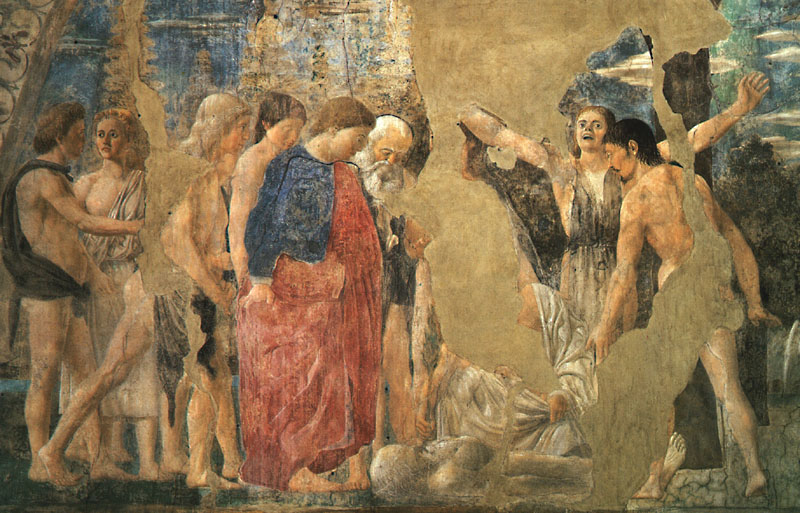 Even in saying this, however, we are judging history in terms religion has supplied. The proof of this is that, in the twentieth century, “scientific” policies of extermination, undertaken in the case of Stalin to purge society of parasitic or degenerate or recalcitrant elements, and in the case of Hitler to purge it of the weak or defective or, racially speaking, marginally human, have taken horror to new extremes. Their scale and relentlessness have been owed to the disarming of moral response by theories authorized by the word “science,” which, quite inappropriately, has been used as if it meant “truth.” Surely it is fair to say that science is to the “science,” that inspired exterminations as Christianity is to the “Christianity” that inspired Crusades. In both cases the human genius for finding pretexts seized upon the most prestigious institution of the culture and appropriated a great part of its language and resources and legitimacy. In the case of religion, the best and worst of it have been discredited together. In the case of science, neither has been discredited. The failure in both instances to distinguish best from worst means that both science and religion are effetively lost to us in terms of disciplining or enlarging our thinking.
“These are not the worst consequences, however. The modern fable is that science has exposed religion as a delusion and more or less supplanted it. But science cannot serve in the place of religion because it cannot generate an ethics or a morality. It can give us no reason to prefer a child to a dog, or to choose honorable poverty over fraudulent wealth. It can give us no grounds for preferring what is excellent to what is sensationalistic. And this is more or less where we are now.”
– Marilynne Robinson, “Darwinism” in The Death of Adam:
Essays on Modern Thought (New York, Picador, 1998, 2005), 70-71
Find the book here on Amazon:
amazon.com/Death-Adam-Essays-Modern-Thought
 To know the mighty works of God, to comprehend His wisdom and majesty and power; to appreciate, in degree, the wonderful workings of His laws, surely all this must be a pleasing and acceptable mode of worship to the Most High, to whom ignorance cannot be more grateful than knowledge.*
 Central Reflections