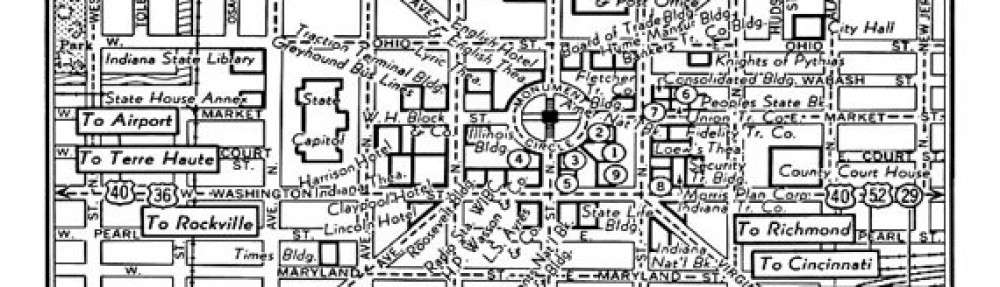
The term Drunkard’s Walk is used in mathematics, physics and related disciplines to describe a type of random walk or an extended series of random steps. Each step connects to the other, but the overall pattern is one of randomness; there is no real direction. The following is Leonard Mlodinow’s story in his book, The Drunkard’s Walk: How Randomness Rules Our Lives, a NY Times bestseller in 2008. For those of us, like myself, who are endlessly intrigued by how math and science affect our daily existence, this is a fascinating line of thought.
He was watching the Sabbath candles, thinking about the rhyme and reason that must underly the patterns of the flame. His father pointed out: “Life isn’t like that. Sometimes things happen that cannot be foreseen.”
His father’s story confirmed this truth: He stole bread from the Buchenwald bakery while prisoner in that concentration camp. “Shoot the suspects until they are all dead or or someone confesses,” was the predictably harsh response of the guards. Assuming he would be shot either way, father confessed – and was given a plum job in the bakery as the baker’s assistant!
His father’s interpretation of that outcome was as follows: “A chance event. It had nothing to do with you, but had it happened differently, you would never have been born.”
Len’s comments follow that: “It struck me then that I have Hitler to thank for my existence, for the Germans had killed my father’s wife and two young children, erasing his prior life. And so were it not for the war, my father would never have emigrated to New York, never have met my mother, also a refugee, and never have produced me and my two brothers. The outline of our lives, like the candle’s flame, is continuously coaxed in new directions by a variety or random events that, along with our responses to them, determine our fate.” (See links below.)
True enough, at one level. At another level, however, there may be far more to the story.
“The steps of a good man are ordered by the Lord,
And He delights in his way.
Though he fall, he shall not be utterly cast down;
For the Lord upholds him with His hand.
– Psalms 37:23-24 (NKJV)
Consider also Jeremiah’s introduction to God’s plan:
Consider Jeremiah’s introduction to God’s plan:
“Then the word of the Lord came to me, saying:
‘Before I formed you in the womb I knew you;
Before you were born I sanctified you;
I ordained you a prophet to the nations.'”
– Jeremiah 1:4-5 (NKJV)
Finally, this classic passage from Paul:
“And we know that all things work together for good to those who love God, to those who are the called according to His purpose. For whom He foreknew, He also predestined to be conformed to the image of His Son, that He might be the firstborn among many brethren. Moreover whom He predestined, these He also called; whom He called, these He also justified; and whom He justified, these He also glorified.”
– Romans 8:28-30 (NKJV)
If we want our lives to be more than a drunkard’s walk, we need to get in touch with God’s plans. God works in accordance with his plans and He plans in accordance with his love.
Links:
• The Drunkard’s Walk on Amazon.com
• Leonard Mlodinow on YouTube
• Home Page at Caltech
 )
)
 Central Reflections